

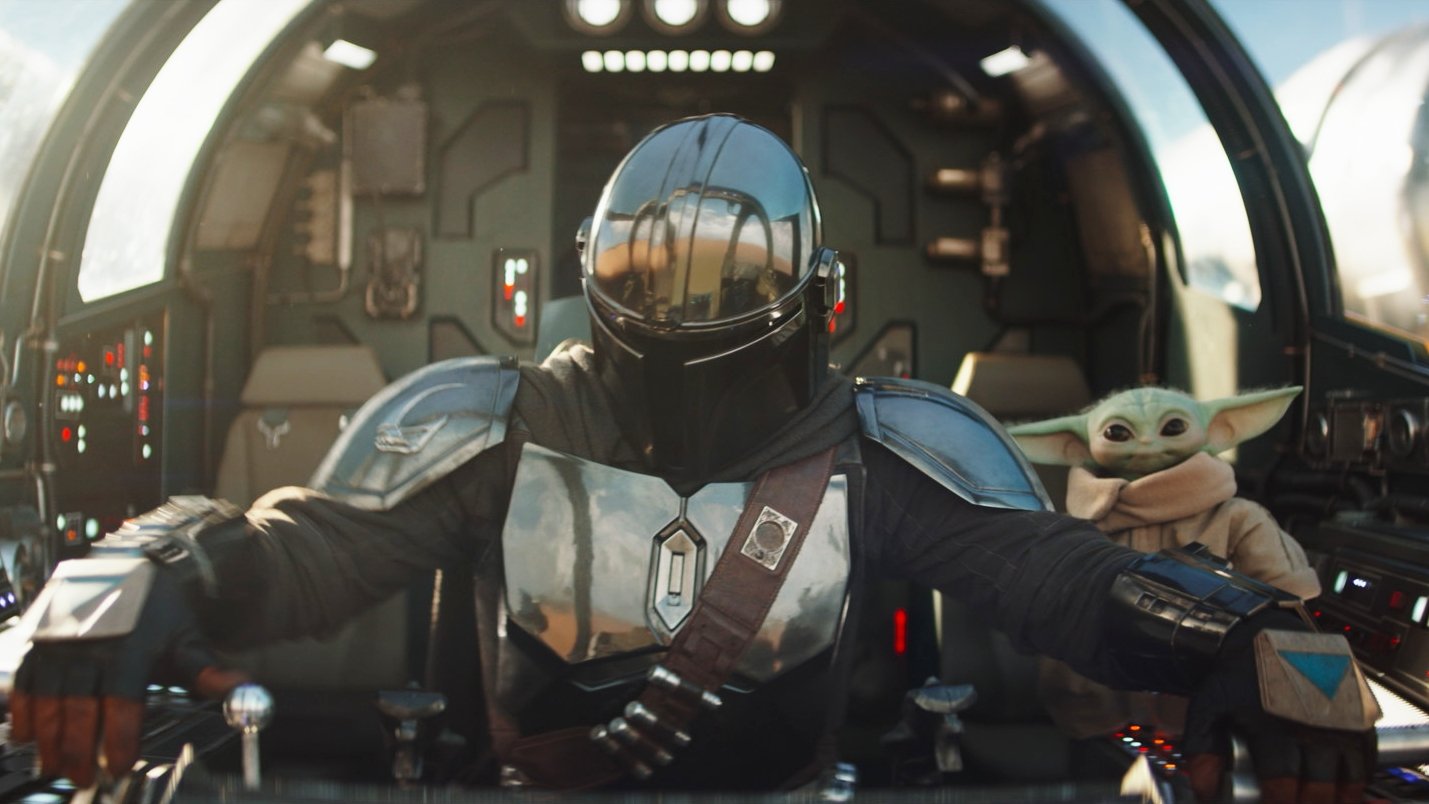
When George Lucas released Star Wars in 1977, he spawned one of the most iconic and profitable theatrical franchises of all time, laying the groundwork for a series of movies that would go on to dominate the cultural zeitgeist for decades after its inception.
The ’70s had Star Wars, the ’80s had The Empire Strikes Back and Return of the Jedi, the ’90s had The Phantom Menace, the ’00s had Attack of the Clones,* Revenge of the Sith*, and The Clone Wars, and the post-Disney purchase 2010's saw a flurry of releases that kicked off with 2015's The Force Awakens, and was followed by* Rogue One*, The Last Jedi, and Solo, before closing the decade out with The Rise of Skywalker.
The 2020s, though, have been notable in representing a shift in the franchise’s release strategy, with the November 2019 launch and subsequent boom of Disney Plus coinciding with Star Wars’ identity shifting from a theatrical franchise to that of a television one. The platform’s launch was met with the premiere of season one of The Mandalorian, a show created by Jon Favreau, that found itself in the homes of approximately 63% of Disney Plus subscribers at the time — a success story that would define what Star Wars would become over the next seven years. As following the huge response to the show (and the disastrous one to The Rise of Skywalker), the period of 2020–2026 would be filled with a myriad of original Disney Plus content, including The Book of Boba Fett, Obi-Wan Kenobi, Tales of the Jedi, Ahsoka, Tales of the Empire, The Acolyte, Skeleton Crew, Tales of the Underworld, Maul — Shadow Lord, three seasons of The Bad Batch, seasons one and two of Andor, and, of course, two more seasons of The Mandalorian.
But despite the overwhelming amount of new content, very few of the projects have had the staying power or cultural impact of the movies that they were referencing. And when bearing in mind that the brilliant Tony Gilroy-written Andor is based on characters created for Rogue One, it’s fair to say that Din Djarin and Grogu of The Mandalorian are the only original characters to come out of Modern Star Wars that have penetrated mainstream culture to the degree that the franchise is used to. And thus, it only makes sense that in 2026, after seven years away from the big screen, the 2020s finally has its Star Wars movie, and it comes in the form of an extension on the hugely popular show.
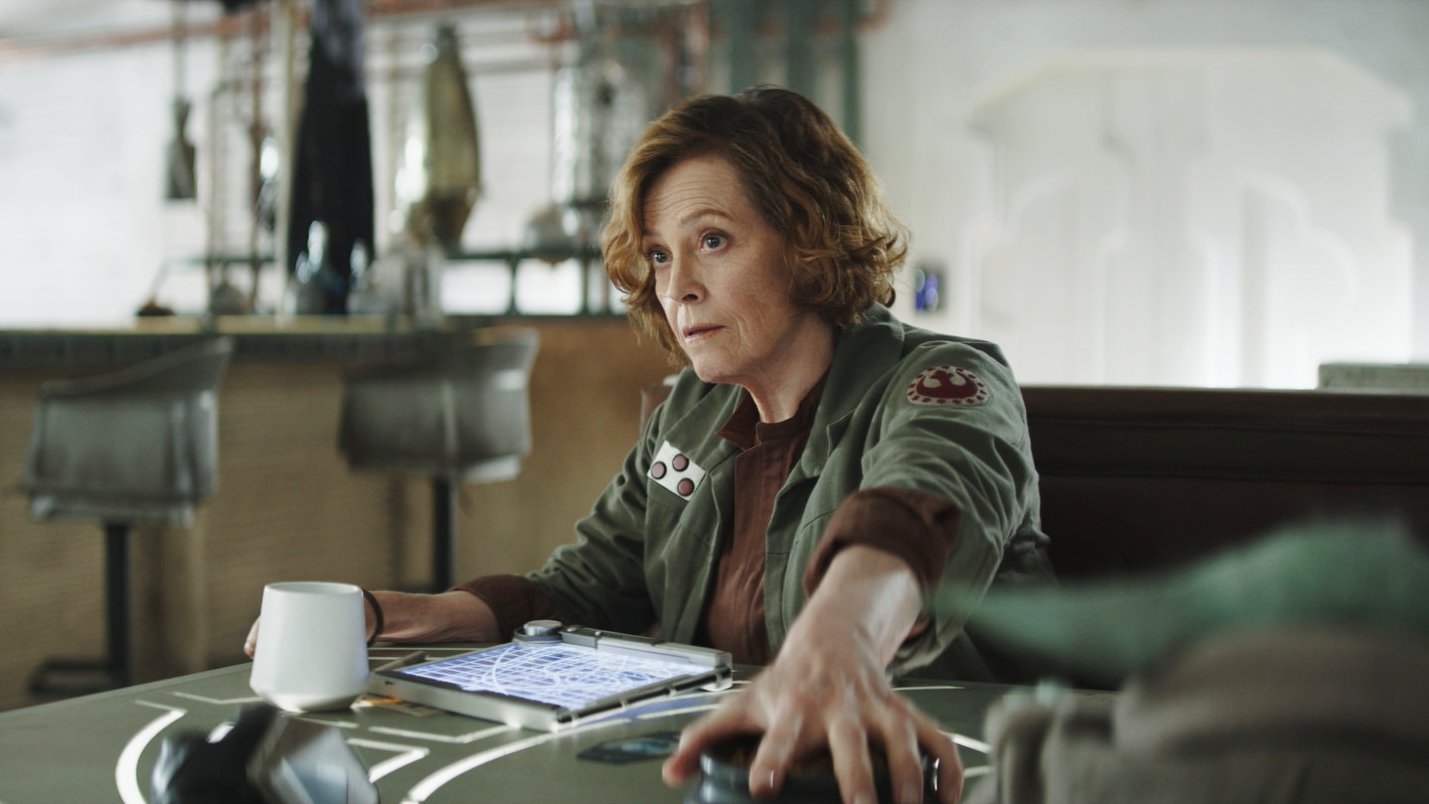
The Mandalorian and Grogu sees the two titular characters return to tackle an all-new mission set by the New Republic (now Mando’s full-time employers), with Sigourney Weaver, who makes her Star Wars debut as Colonel Ward, sending the two on their way to find and liberate Rotta the Hutt (voiced by Jeremy Allen White), in order to be returned to the Hutt Twins, whom we last saw in The Book of Boba Fett.
Now for those unaware, the show typically plays out a little something like this: Mando is given a mission, he brings Grogu along with him, they face some hurdles, they overcome them, and they ride off into the twin sunset. The same applies here. The Mandalorian and Grogu offers nothing new to the Star Wars canon, it seems to exist for one solitary reason: The sake of it. We learn nothing more of the New Republic era galaxy, the two lead characters go through very little development, and the Favreau-Filoni-Kloor triple-hander script is as bare bones as it gets. The magic of Star Wars is completely lacking — there is no “I am your father”, no “That’s not how the force works”, hell, there’s not even anything as contentious as “Rey Skywalker”. It’s all just so safe, and made with the sole utilitarian purpose of being as accessible as possible for as many people as possible. I’m sure Bob Iger loved it, but I’m not sure how many others will.
The film is as small as Star Wars has ever gotten, and it’s unsurprising given the fact that the story is an amalgamation of what was to be a season four of the show. When you take TV material, with TV characters, and have it shot by a TV cinematographer (David Klein), the result, unsurprisingly, is something that looks a lot like an extended episode of the show with a little extra budget thrown in.
The saving graces that stop the film from being totally devoid of any merit are Ludwig Göransson’s score — that proves once again why there is nobody operating on his level right now — and Grogu himself, who might just be the only pure thing in the world today.
Though Grogu is more than ever being played for laughs and ‘awwws’, unfortunately, this does, in fact, work. And is especially apparent during a sequence in the movie’s final act where Grogu takes centre stage — demonstrating his potential as a leading Star Wars character for the future whom the franchise could well be built entirely around.
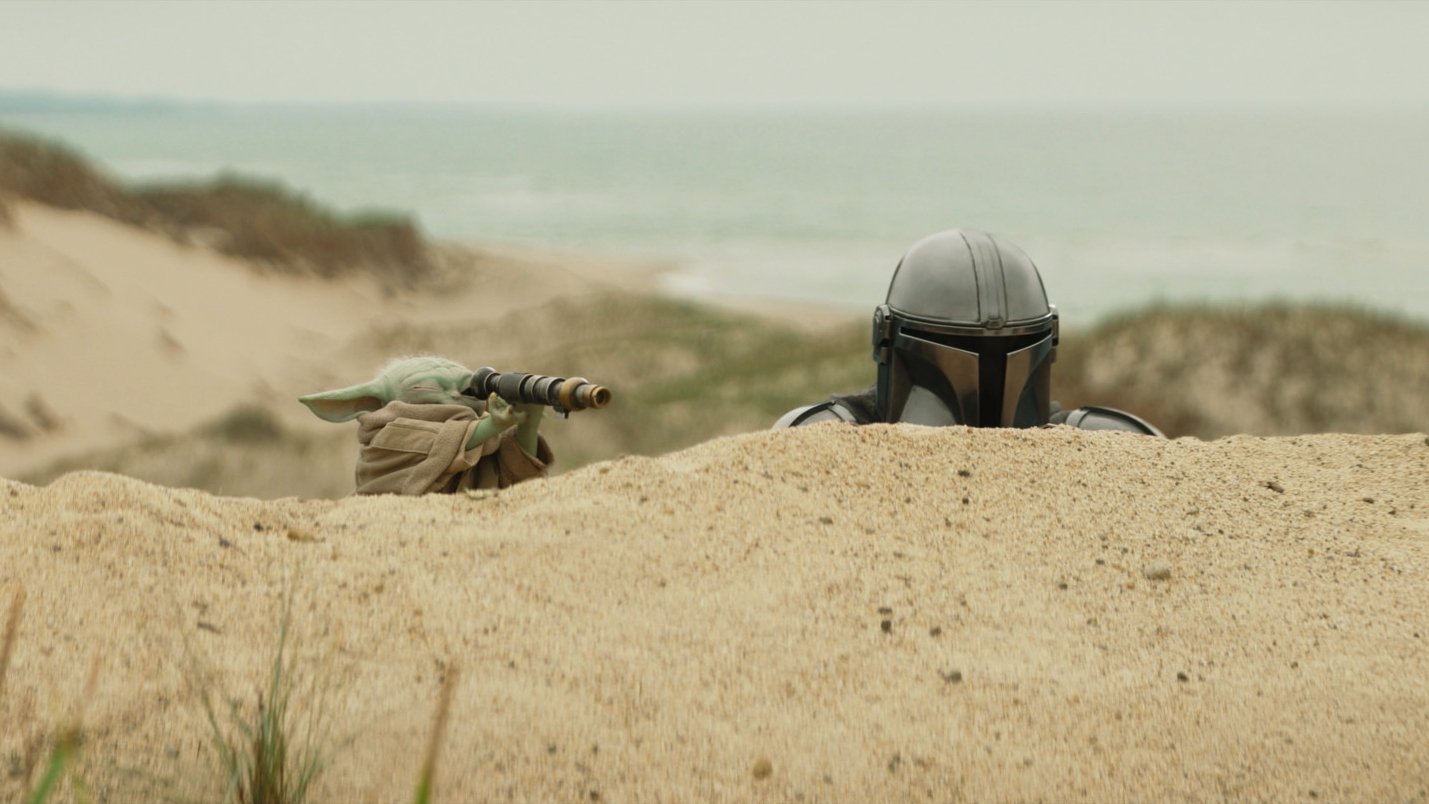
Ultimately, whilst it’s nice to have Star Wars back on the big screen, this doesn’t feel a lot like Star Wars. At least not the Star Wars cinemagoers have become accustomed to. Instead, what we get is a glorified Disney Plus special presentation that is made not to be enjoyed on the biggest screen possible, but instead — in keeping in line with the franchise’s ethos in the 2020s — from the comfort of your home. Lacking in magic, lacking in cinematic spectacle, and certainly lacking in purpose. This is not the way.