


I’ve never been the biggest fan of the Hunger Games franchise. I never grew up reading or watching these stories; in fact, the first time I ever watched them was in preparation for The Ballad of Songbirds and Snakes. That being said, I immediately fell in love with this world and its dystopian portrayal of ours, making Sunrise on the Reaping one of my most anticipated movies of the rest of the year.
The big question with this is: how does it stack up against the rest of the saga? This is competing with giants, and for it to reach those heights - especially after five films - Suzanne Collins and Francis Lawrence had to pull something truly special out of their bag. Unfortunately, though I can see the potential for that, Sunrise on the Reaping comes nowhere close to reaching that - granted, almost unattainable - stature.
Me saying this is one of - if not the - worst that The Hunger Games has to offer isn’t to say this is bad. In fact, I really quite enjoyed many parts of this. My main gripe, however, was how it positions itself as more of a legacy sequel than simply an expansion of this world.
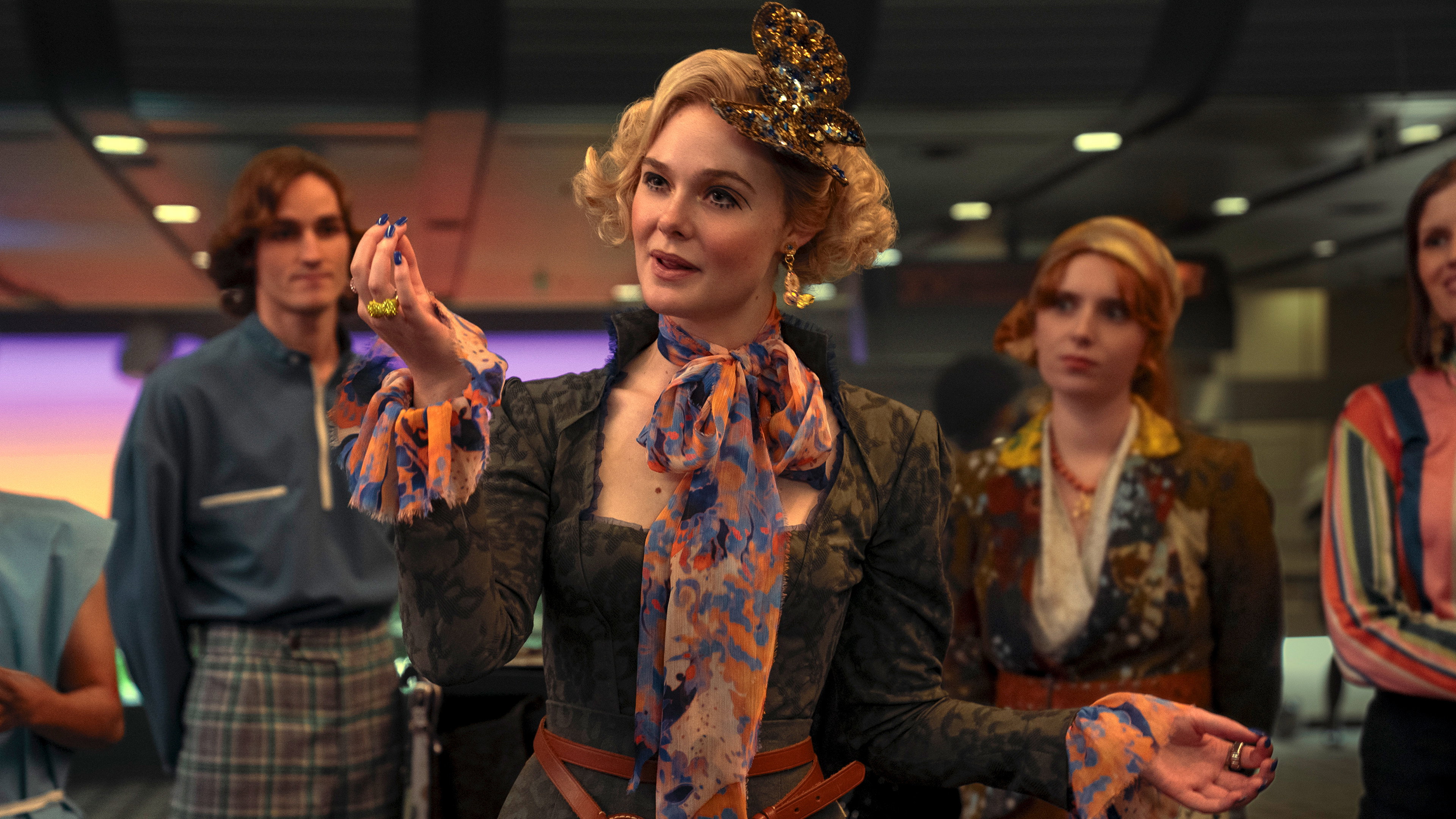
Sunrise on the Reaping holds itself up by nostalgia in so many, quite unnecessary ways - something that they had no requirement for with The Ballad of Songbirds and Snakes - our last trip to Panem, following the creation of President Snow. My theory as to why is that Snow’s origin was always part of Suzanne Collins’ plan, though Haymitch’s wasn’t; however, that’s unimportant. In my opinion, the mere inclusion of characters like Mags, Effie, Wiress, and even Beetee in some ways felt incredibly unnecessary - almost as if their only use was for the audience to recognise somebody, activating some sort of instant dopamine rush from remembering a much better time in this saga's cinematic history.
This ‘nostalgia bait’ tactic became blindingly clear with two distinct moments. The first was President Snow mentioning Lucy Gray to Haymitch - something that felt very out of character for him, as they express in his origin story that Snow has made all attempts to bury that time, and that person, in his life. The second was Effie’s inconsequential comment on mahogany, a line which wouldn’t have changed a thing if omitted.
One thing I did love about this movie was Joseph Zada. This young, unknown actor takes the character of Haymitch - a character which we grew to know and love inside and out over the course of the last 14 years - and fills Woody Harrelson’s shoes incredibly, both honouring the man who came before and making the character his own in a few simple ways.
Unfortunately, I believe the writing and direction are what let his performance down, which I don’t attribute to the actor himself in any real way. It seemed that many, if not all, of Haymitch’s emotional beats held the same weight - that being absolutely everything. Whenever Haymitch meets any trouble, he screams at the very top of his lungs and pleads with Snow. However, when everything is met with the same reaction, it all becomes nothing but noise.
An example that really caught me was Ampert’s death. This is the young child that our main character grows close to, until that relationship is suddenly and forcefully ripped from both the character and the audience. This was supposed to be Haymitch’s ‘Rue moment’ - as it were. However, this scene is met with absolutely no delicacy.
When Rue dies in the first movie, Katniss takes a moment to lay a small memorial for her, proceeding to - essentially - begin the revolution with a single hand signal to the camera. This gives the audience a moment to breathe and really take in the weight of the death we just witnessed. This death also follows us into Catching Fire, in which Katniss is forced to confront Rue’s grieving family and apologise for the horrors both they and their daughter had to endure. Haymitch, however, forces the exact same reaction as always and simply moves on. Once he’s dead, Ampert means nothing, really. He’s never thought about again, even though the entire movie, until then, was nurturing that relationship.

The big twist in Haymitch’s games is that, rather than including two tributes from every district, it now includes four. This, in theory, should make for a much more bloodthirsty, extravagant, and action-packed ride. However, it never feels any different to the rest, partly because it basically isn’t. Halfway through, a volcano erupts, and we’re told it kills over half of the tributes, returning us to where we were before. Not to mention that Haymitch doesn’t encounter a single adversary for the first half of the games, as he frolics through fields of flowers.
Speaking of the games, Kieran Culkin is made for Caesar Flickerman. He led every single scene he was a part of, and I would have liked to have seen more from him, if anything. Culkin brings an incredible physicality to the character that only builds upon Stanley Tucci’s original, as well as adding a few bitter undertones which show a perfect understanding of this character and its intricacies - especially at this point in Panem’s history.
For how much I did truly enjoy this - despite my constant slating - I really hope this is the last time we return to Panem. Any more adaptations of this world - even this one - feel somewhat exploitative of this world, its messages, and the saga's fanbase.
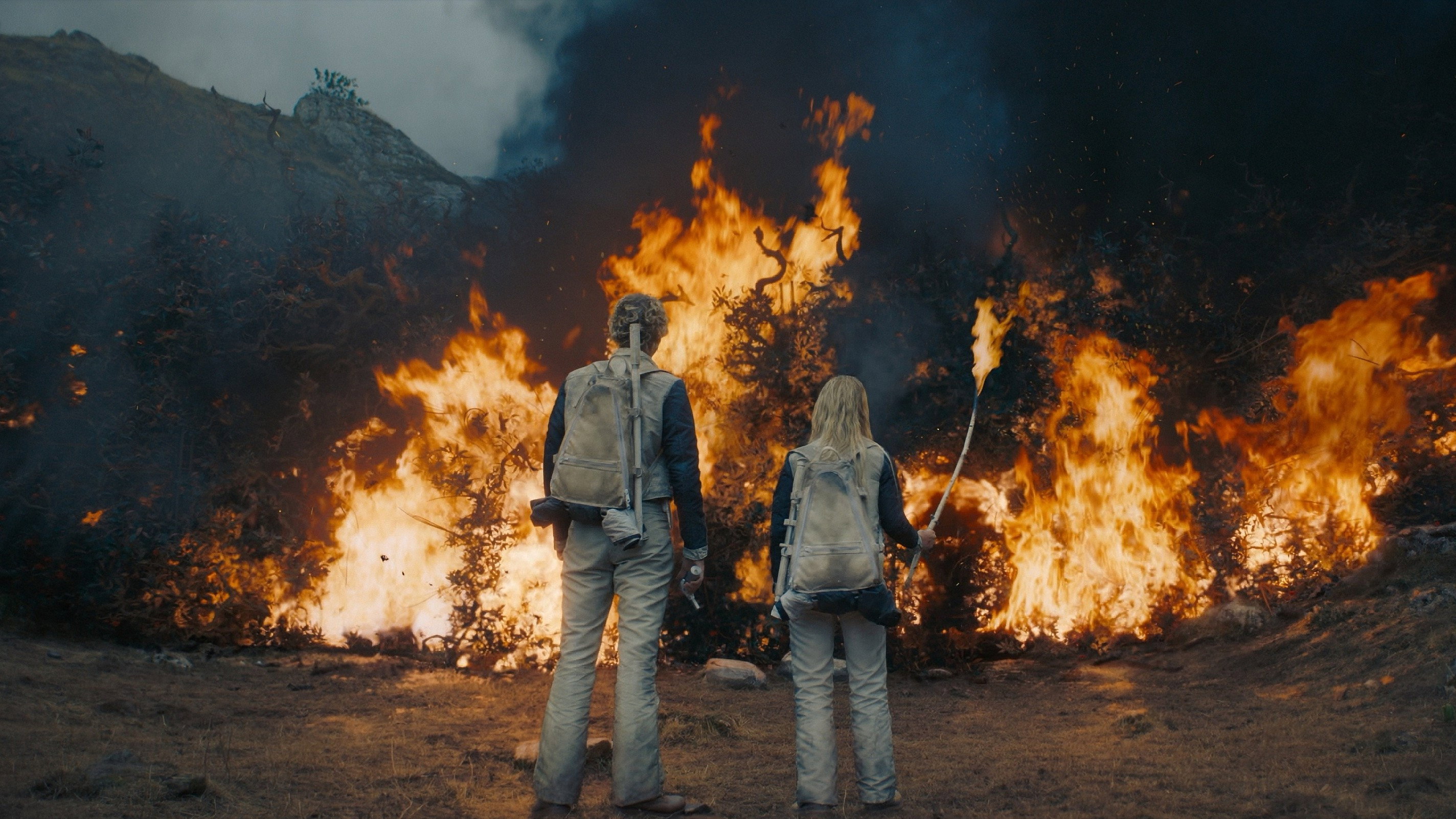
Much of the reason people want these books and movies, especially Haymitch’s games, is that they simply want to see the massacres that made the characters who they are in the present day. However, this feels antithetical to these characters, as it fundamentally changes them in a few ways - good or bad - and leaves nothing to the imagination. Why was it important for us to see what made Haymitch a bitter alcoholic? Is the answer, ‘it’s what the fans wanted’, really enough? I don’t think so.
Not only are these origin stories fundamentally pointless, but it also puts the audience in, somewhat, the same place as the Capitol. We glorify these deaths and slam our knives and forks into the table, demanding more stories, more death, more horrors, forcing Suzanne Collins to fabricate new origins on existing characters that weren’t part of any original plan, weren’t needed in any real way, and add nothing to the original stories. The only purpose these books serve is satisfying the audience’s bloodlust. Would I like to find out what caused Finnick’s distrust or Johanna’s rage? Yes, I’m sure it would be interesting, but what I don’t want is for Collins to force out another passionless origin story that leaves me feeling empty. One is enough; two is already way too much.