

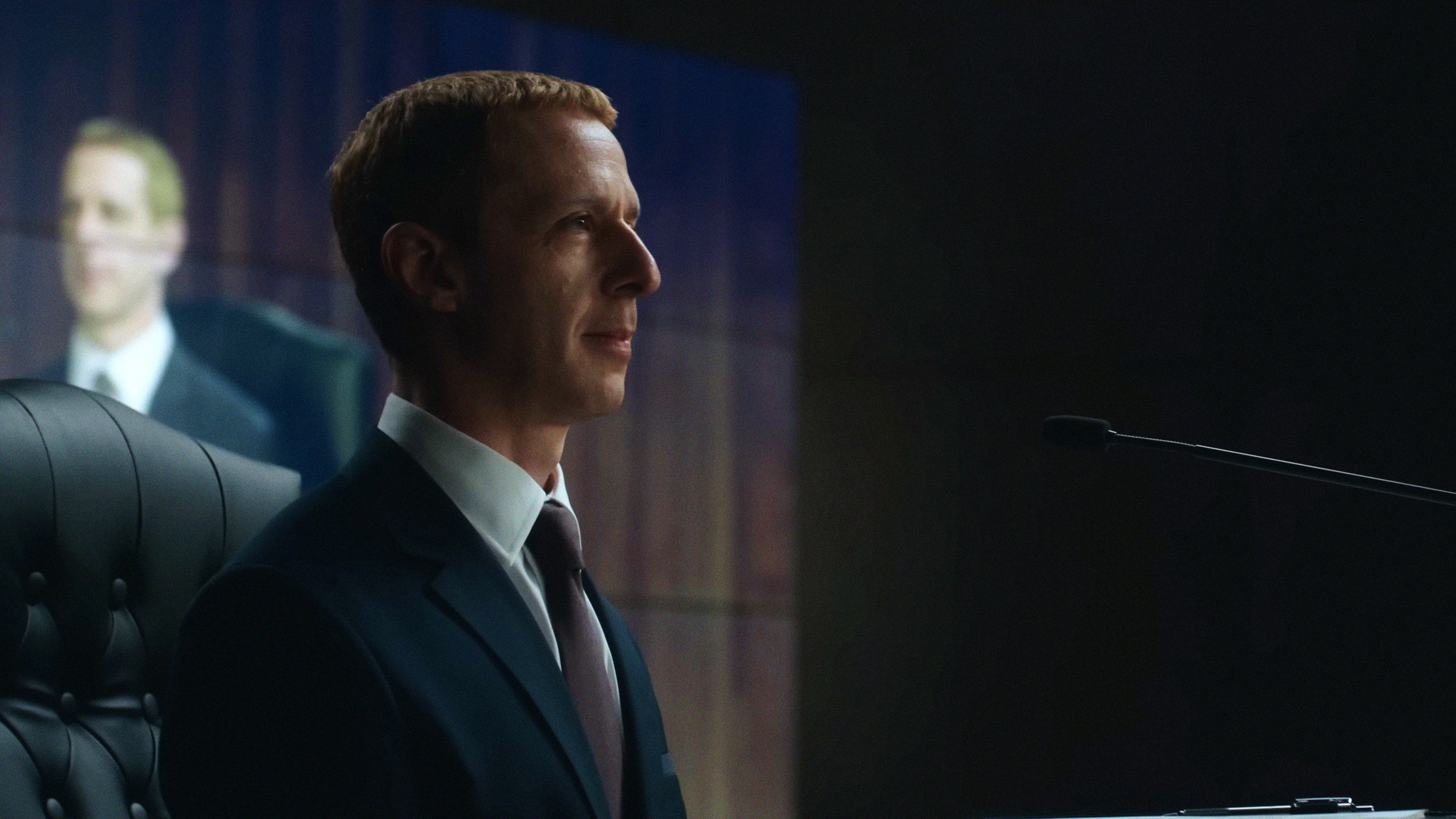
The Social Reckoning acts as somewhat of a sequel to 2010’s The Social Network, though rather than showing Facebook’s rise, it shows how it has impacted the world so many years on. Suffering from a severe lack of David Fincher, Aaron Sorkin - writer of both the 2010 and 2026 movies - steps up to the chair. While Sorkin’s pen is and has always been magic, it seems his energy is much better focused entirely on the script.
We follow Jeff Horwitz, a Wall Street Journal investigative reporter, and Frances Haugen, a Facebook whistleblower, in an attempt to prove Facebook’s knowing and intentional push of users towards harmful extremist echo chambers, leading to the Journal’s 17-part expose - The Facebook Files. The Social Reckoning acts as part 18, showing that Facebook has done very little to reverse or prevent the harm they’ve caused and continue to cause, as well as how Facebook has knowingly allowed disinformation, especially from political candidates, on its platform with absolutely no guardrails in place.
While this very much succeeds in its mission to evoke emotion, with all the horrifyingly factual statements it makes on American politics and the state of the internet during and post-COVID, as well as showing how large a part Zuckerberg and Facebook have had in our relationships with the internet and social media, this often fails to show any real personality in doing so. The subject matter is horrifying as it is, though that can’t be all this relies on.

Reckoning shows a stark contrast with The Social Network in its personality, with how astoundingly lifeless it proves to be - especially compared to the style and personality oozing out of every second of the 2010 movie. I won’t deny that The Social Reckoning had monumental shoes to fill, though it's not as if the first was begging for a sequel - or even that this had to attach itself to David Fincher’s movie in any real way. With the amount of comparison this makes to The Social Network, it can’t be surprising that the audience will draw their own comparison, in which David Fincher’s cinematic marvel will always trump The Social Reckoning.
Speaking of comparison, The Social Network seems to have a talent for fast-moving, ping-pong-style dialogue. Darting from character to character, somehow holding three different conversations at once, replying to each sporadically, though feeling so effortless that it’s simple to keep hold of, as the audience.
The Social Reckoning attempts this, though it doesn’t seem to have nearly the same stamina. Scenes don’t even last long enough, and any conversation is cut off - in one way or another - the moment anything seems to be getting heated. Even though Sorkin has an incredible talent in his pen, sitting behind the camera may have blocked much of the beauty that can come from a script of his. He’s magical when paired with a David Fincher or a Rob Reiner, though he can’t seem to carry the same weight on his own.
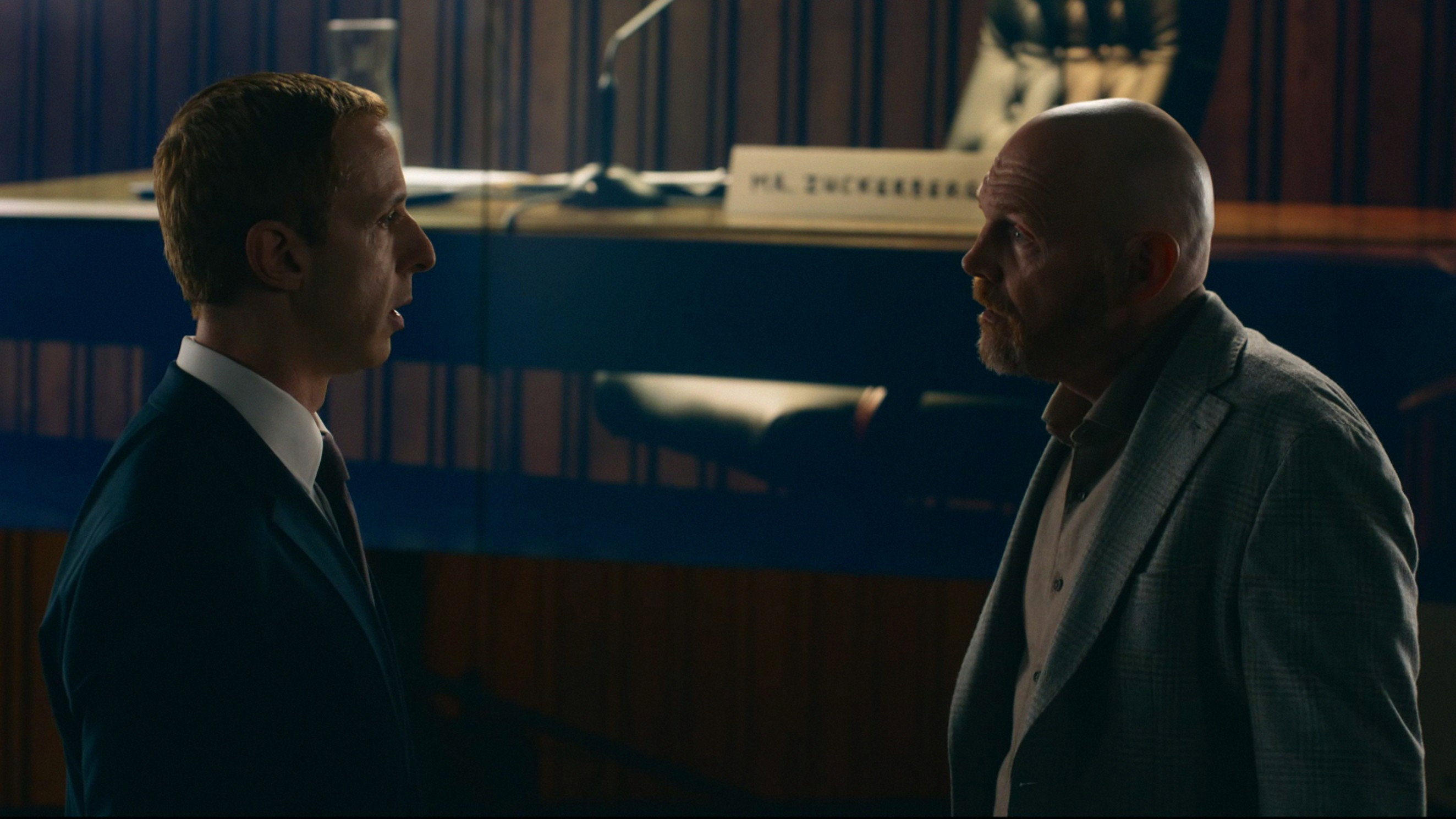
I will say, a massive point in Reckoning’s favour - at least in the grand scheme of legacy sequels - is that it simply doesn’t try too hard to be The Social Network. However, in this case, I believe this may have benefited from taking slightly more inspiration, simply because of Network’s pure star power.
Jeremy Strong disappears into Zuckerberg just as it always seemed he would, though it feels like an entirely different Zuckerberg from that portrayed by Jesse Eisenberg. However, that may be partially attributed to the sixteen years of Zuckerberg’s life between the two movies. Unfortunately, Strong’s performance can often come off as too much of a caricature, as if Sorkin told him to “be more robotic” one too many times, which can make it feel somewhat disingenuous and too much like a performance, bringing me out of the experience entirely. However, Mikey Madison and Jeremy Allen White simply make me wonder how a romcom starring the two may turn out - it seems promising.
In The Social Network, we see how Mark Zuckerberg feels the need to constantly prove that he’s smarter and simply better than anybody in any room. Strangely, The Social Reckoning seems intent on doing this same thing, though with its audience, as if it's saying: “we know you’re not smart enough to understand the technical jargon” multiple times throughout. Jeff Horwitz’ cluelessness in this field can possibly be used as some sort of an everyman device, though Haugen’s constant verbal abuse towards him seems like it ultimately just alienates part of its audience.

The Social Network is a movie that works almost entirely off momentum - as well as its incredible penmanship - even when we return to the various courtrooms, you can feel the biting tension seeping through all the professionalism. With The Social Reckoning’s novel-like structure, in its various chapters, it manages to halt much of its built momentum by moving onto a new stage of this story. Rather than these chapters building upon each other, they work to simply move the audience onto the next episode, essentially telling us that this part of the story is over and we’re now moving on.
Ultimately, these chapters made any tension or momentum dissipate within seconds, causing this to become such a slog to get through. In a movie like this, you need more than the message to get you by, because if you lack that underlying tension, the ever-present sense of dread, you’re simply watching a few people talk about tech in various locations, and I just don’t care to watch that.
All in all, The Social Reckoning presented a few incredibly interesting and unnerving facts about today’s social media landscape, though it holds its entire weight on that - which simply isn’t enough to hold it in any high regard. The Social Network has always been almost impossible to rival, though Reckoning’s attempt is so weak that it seems to have known it would fail from the get-go and hasn’t even tried, at least not nearly as hard as it should have. I don’t believe this is a bad movie, and it can even be quite gripping at times, though ‘at times’ simply isn’t enough to hold a candle anywhere near the powerhouse The Social Reckoning attached itself to.